Regulatory challenges and testing management for the petcare market
In recent years, pet care products have experienced steady growth, with market forecasts indicating that the sector will exceed €400 billion over the next decade. We recently explored this topic in one of our articles, but its growing importance calls for a more in-depth analysis.
At the heart of this expansion is the well-established phenomenon of pet humanizatio, the tendency to regard companion animals as true members of the family. This cultural shift has led consumers to demand increasingly higher quality standards for products intended for dogs, cats, and other companion animals. Shampoos, coat cleansers, skin care products, ear and eye cleansers, dietary supplements, and oral hygiene products are becoming increasingly significant segments of the pet care market.
Regulatory landscape: what are the main challenges?
One of the greatest challenges for companies operating in this sector is the lack of a harmonized international regulatory framework. Unlike cosmetics for human use, pet care products do not, in most countries, fall under a dedicated regulatory category.
In Europe, many pet care products are classified and regulated under feed legislation and must be registered and authorized before being placed on the market, specifically through inclusion in the list of feed materials and ingredients established by Regulation (EU) No. 68/2013. Other categories of pet care products, however, fall under legislation applicable to products intended for human use as chemical mixtures and are therefore subject to the REACH and CLP regulations.
The situation is similar in the United States, where pet care products are not clearly classified under a dedicated regulatory framework. This regulatory gap means that products are generally regulated as chemical mixtures, with the legislation focusing primarily on their individual ingredients.
In other countries, such as Canada, pet care products are regulated under the Canada Consumer Product Safety Act, legislation originally intended for consumer products for human use but which also covers certain products intended for animals.
In the United Kingdom, pet care products are subject to specific regulation only when they make claims, particularly those that may be interpreted as medicinal. In such cases, they fall within the scope of the country’s veterinary medicines legislation.
In Asia, and specifically in South Korea, pet care products are regulated by the Ministry of Agriculture, Food and Rural Affairs (MAFRA), which establishes product standards as well as lists of permitted and restricted ingredients.
Finally, in countries such as China and Brazil, there is currently no dedicated regulatory framework specifically addressing pet care products. Moreover, compliance with cosmetic legislation is not mandatory in these markets but remains a voluntary choice made by the manufacturer.
This regulatory diversity makes it essential to adopt a product development strategy that incorporates safety, regulatory compliance, and scientific substantiation of product claims from the earliest stages of development.
Why is formulating products for animals different from formulating for humans?
The physiological differences between human and animal skin are significant. The skin of dogs and cats has fewer layers of corneocytes and a pH that is generally closer to neutral. As a result, percutaneous absorption may be greater, and the skin barrier can be more sensitive to harsh ingredients or poorly balanced formulations.

For this reason, products designed for human use may be unsuitable, or even harmful, for companion animals. Formulations specifically developed for the target species are essential to preserve skin barrier function and ensure product safety and tolerability.
Supplements and biotics: nutrition also matters
Alongside grooming products, interest in dietary supplements for companion animals continues to grow. Essential fatty acids, vitamins, minerals, glucosamine, and other functional ingredients are increasingly used to support joint, skin, and metabolic health. At the same time, there is growing attention to probiotics, prebiotics, synbiotics, and postbiotics. Numerous studies have demonstrated their potential to support gut health, enhance immune function, and promote overall animal well-being.
However, the efficacy of these ingredients cannot simply be extrapolated from humans to animals. Species, breed, age, and microbiome composition all have a profound influence on biological responses, making species-specific studies essential.
Safety: a fundamental requirement
All of the considerations outlined above depend first and foremost on the development of safe products. Among the most important safety parameters are:
- pH determination;
- microbiological testing;
- analysis of chemical contaminants;
- verification of the presence of undesirable or toxic substances.
Particular attention should be paid to substances such as heavy metals, bisphenols, phthalates, and PFAS. Likewise, certain ingredients commonly used in other sectors, such as tea tree essential oil and xylitol, may be toxic to specific animal species.
Identifying these risks at an early stage is crucial to ensuring product safety throughout its entire life cycle.
Today’s scientific innovations provide advanced tools for assessing product safety without the need for animal testing. Two-dimensional cell models and reconstructed three-dimensional tissues derived from animal species enable the evaluation of endpoints such as skin irritation, sensitization, ocular tolerability, and cytotoxicity. These models generate rapid, reproducible, and ethically responsible data, supporting the development of safer products that meet both regulatory requirements and market expectations.
Demonstrating the efficacy of petcare products
In addition to safety, product efficacy is another key aspect that should not be overlooked. In vitro testing methods make it possible to evaluate a wide range of performance parameters, including coat combability and detangling, hair break resistance, shine enhancement, cleansing performance, and many other product claims.
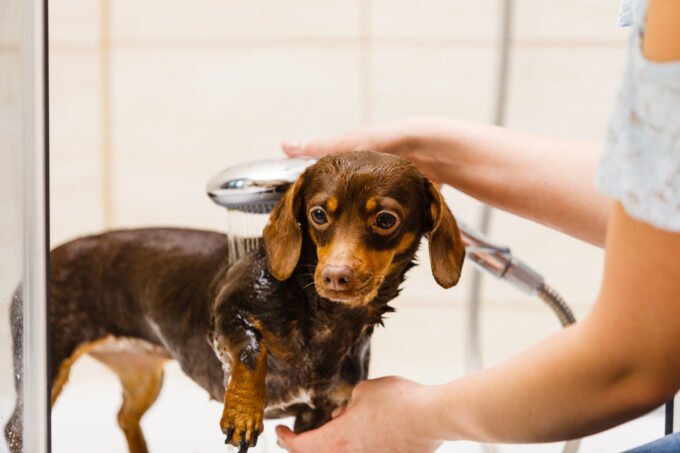
Only during the final stages of product development should in-use studies involving companion animals be considered. These studies are conducted with animals voluntarily enrolled by their owners and follow controlled protocols under the supervision of veterinary professionals.
Rely on our expertise
The pet care industry is undergoing a period of rapid transformation. Growing consumer awareness of animal health and well-being is driving demand for products that are not only safe and effective but also supported by robust scientific evidence.
Our experts are ready to support you throughout every stage of product development, from formulation and testing to regulatory compliance and market launch. Through our comprehensive testing and professional consulting services in both Europe and North America, we provide the expertise needed to perform essential safety assessments required for market access, as well as advanced efficacy studies using state-of-the-art methodologies, including innovative 3D models.
Our approach helps ensure that your pet care products achieve the highest standards of safety, performance, and quality.