The haircare market continues to evolve as consumers increasingly seek products that deliver measurable benefits beyond cleansing and styling. Whether the goal is to strengthen the hair fiber, reduce breakage, improve scalp health or support hair growth, brands are expected to substantiate their claims with robust scientific evidence.
For manufacturers, this means that product development goes hand in hand with safety assessment and efficacy testing. By integrating laboratory testing throughout the development process, companies can launch innovative products backed by reliable data and compliant with current cosmetic regulations.
From product development to claim substantiation
Developing stage involves much more than selecting high-performing ingredients. Every formulation should undergo a comprehensive testing strategy designed to evaluate both its safety profile and its performance.
The appropriate testing plan depends on the product type and the claims to be supported. Shampoos, conditioners, hair masks, scalp treatments, serums and styling products all require specific evaluation protocols to demonstrate their intended benefits.
A science-based approach enables manufacturers to optimize formulations early in development while generating objective data to support marketing claims.
Ensuring consumer safety
Haircare products are often used daily and come into direct contact with both the scalp and the surrounding skin, making safety assessment an essential step before market launch.
Several laboratory tests can be performed to evaluate:
- Skin irritation potential;
- Eye compatibility;
- Sensitization and allergic risk;
- Overall product safety and regulatory compliance.
These assessments help ensure that products are well tolerated under normal conditions of use while meeting the safety requirements established by cosmetic legislation.
Demonstrating Product Efficacy
Consumers increasingly expect cosmetic claims to be supported by scientific evidence. For this reason, efficacy testing has become a key component of haircare product development.
Depending on the formulation and its intended claims, different in vitro, instrumental and clinical methods can be used to evaluate parameters such as:
- Hair strength and resistance to breakage;
- Hair hydration;
- Shine and gloss;
- Combability;
- Frizz control;
- Protection against environmental stressors;
- Scalp condition;
- Hair growth support and reduction of hair loss.
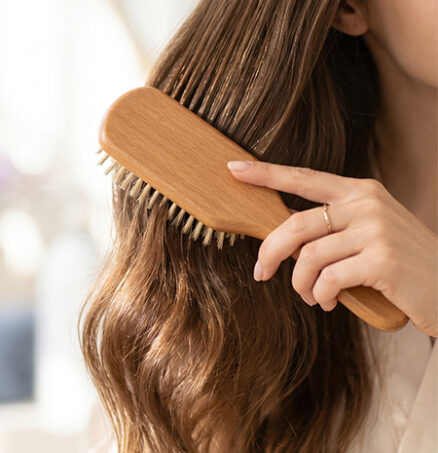
Objective measurements provide manufacturers with reliable data that can substantiate product claims while increasing consumer confidence.
The role of in vitro testing
In vitro models have become valuable tools during the early stages of cosmetic research and development.
Using advanced cellular models, researchers can investigate the biological activity of cosmetic ingredients and formulations, evaluating their effects on scalp cells and hair follicle biology before proceeding to clinical studies.
These methods allow companies to:
- Screen active ingredients efficiently;
- Optimize formulations;
- Better understand mechanisms of action;
- Reduce development time and costs;
- Generate robust scientific evidence to support product innovation.
Because these techniques are performed under controlled laboratory conditions, they provide highly reproducible and reliable results.
While in vitro studies provide valuable biological insights, instrumental and clinical evaluations are essential to demonstrate the real-world performance of finished products.
Advanced analytical techniques can objectively measure changes in hair fiber properties after product application, including improvements in mechanical strength, hydration, shine, softness and resistance to damage.
When combined with studies involving human volunteers, these assessments generate comprehensive evidence supporting product efficacy under normal conditions of use.
Supporting innovation through scientific validation
Today’s competitive haircare market demands more than attractive formulations, it requires credible scientific substantiation.
By combining safety assessments, efficacy testing and regulatory expertise, manufacturers can develop products that not only comply with international regulations but also deliver measurable benefits supported by objective data.
Scientific validation strengthens consumer trust, enhances brand credibility and provides a solid foundation for innovative haircare products that stand out in an increasingly evidence-driven marketplace.