Why it is essential for beauty brands
In the beauty and makeup industry, it is no longer enough to simply promise results—it has become increasingly important to prove them. Consumers are more attentive, informed, and selective when choosing makeup products, and companies must adapt accordingly to ensure high standards.
How can these data be best implemented?
Clinical studies are an essential tool for validating the effectiveness, safety, and performance of cosmetic products.
These are scientific tests conducted on volunteers under medical, dermatological, or specialist supervision, with the aim of verifying a product’s actual performance through rigorous methodologies, advanced instruments, and objective analyses.
In the makeup sector, these studies support various claims, such as “Long Lasting,” applicable to mascaras, lipsticks, eyeliners, and kajal products, particularly important when makeup must remain flawless for many hours. Other claims concern resistance to external factors such as sweat, tears, and water—for example, after swimming in the sea or a pool. Another widely used claim is “No Transfer,” especially for lip products.
The makeup category also includes products enriched with skincare active ingredients, creating true hybrid cosmetics. For these formulations, specific tests can be carried out to support claims related to sun protection, hydration, skin tone uniformity, reduction of spots and imperfections, as well as illuminating and mattifying effects.
The sensory aspect should not be underestimated. Together with other tests, it plays an essential role in product evaluation. Sensory tests analyze parameters such as texture, consistency, compactness, spreadability, lightness, and olfactory experience, while also assessing the emotional impact of the cosmetic product. These aspects can positively influence self-esteem, mood, perceptions of elegance and sensuality, as well as social confidence—factors that are increasingly being studied through neuro-psycho-cosmetic research.
Validating these claims is essential. It is a regulatory requirement and no claim may appear on product labeling unless it has been properly substantiated. In addition, validation is valuable for communication and marketing purposes and helps build trust in the brand.
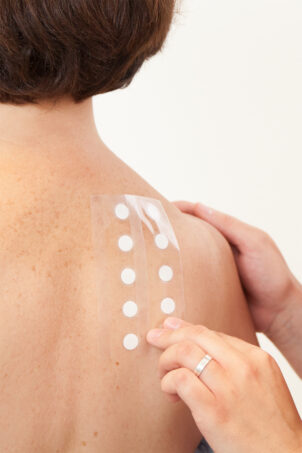
Why do beauty brands invest in clinical testing?
Scientific credibility: A product supported by clinical data conveys greater authority and reliability. Consumers seek transparency and concrete evidence before making a purchase.
Consumer safety: Testing helps verify skin tolerance and reduce the risk of adverse reactions, especially for products intended for sensitive areas such as the eyes and lips.
Support for marketing claims: Cosmetic regulations require every claim to be substantiated. Clinical studies provide scientific evidence that can be used in advertising campaigns, packaging, and digital communications.
Competitive advantage: In a highly competitive market, scientifically demonstrating the effectiveness of a makeup product can make a significant difference compared to competitors.
What Types of Tests Are Conducted?
Depending on the product and the brand’s objectives, different types of assessments can be performed. In many cases, requests can be customized for individual brands, as specific evaluations may be required based on the product or its unique characteristics.
Among the most commonly performed tests are:
- Makeup wear and durability tests throughout the day
- Dermatological and ophthalmological evaluations
- Instrumental analyses of texture, coverage, and luminosity
- Consumer tests and self-assessment studies to collect real user feedback
- Skin compatibility tests on sensitive skin
- A Tailor-Made Approach for Every Product
Every formula has unique characteristics and requires a customized testing plan. For this reason, it is important to collaborate with partners specialized in cosmetic clinical studies, capable of designing targeted protocols and providing comprehensive scientific support.
From claim definition to the final analysis of results, a tailor-made approach makes it possible to maximize the product’s potential.
Understanding how a clinical test is actually developed and conducted is essential. To explore the topic in greater depth, we invite you to download our publication, where our experts examine the subject in more detail, highlighting the importance of defining an appropriate clinical testing development plan to achieve claims safely, accurately, and without complications.

What are the future scenarios?
Clinical studies are now a strategic element for the success of a makeup product. They not only guarantee safety and effectiveness but also help brands communicate with greater transparency, authority, and versatility.
Investing in scientific validation means transforming a claim into concrete proof. Validate your claims with the support of our experts and rely on customized clinical studies to test performance, safety, and effectiveness with the assistance of beauty industry specialists.